Drew Bennett · 19 September 2026
Cedar Root Networks and Their Influence on Sediment Flow Around Harbor Pilings
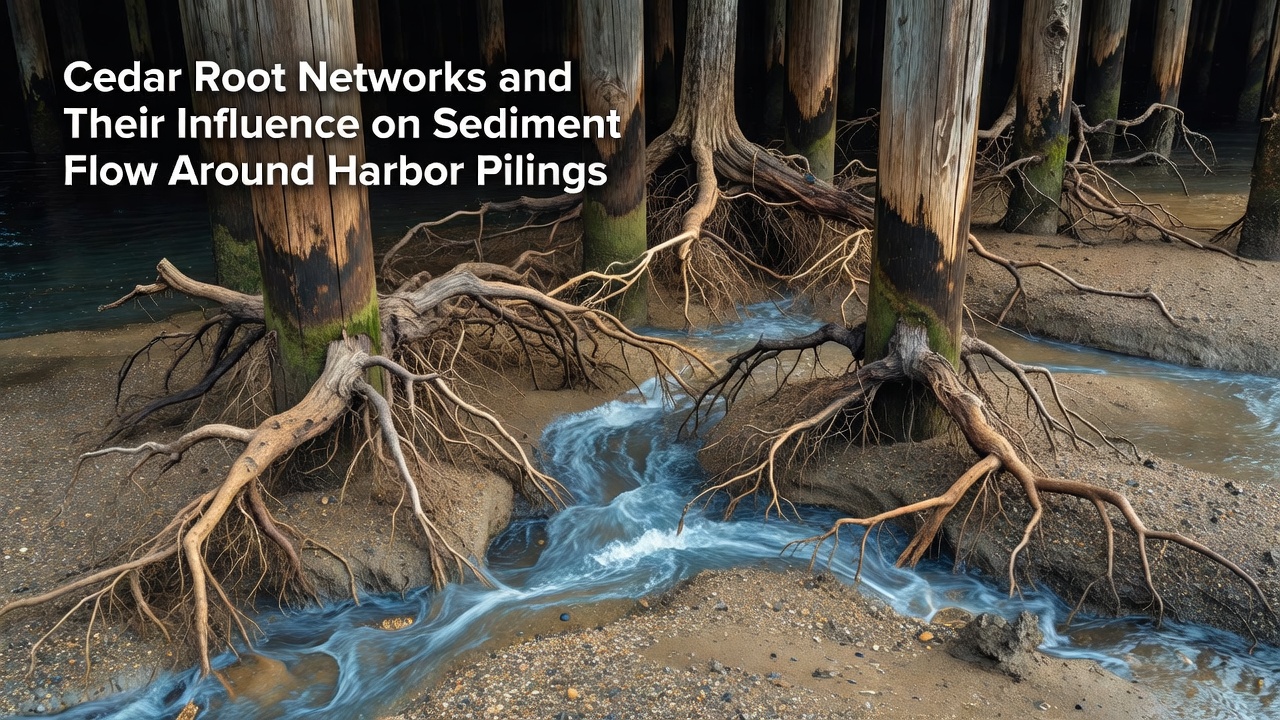
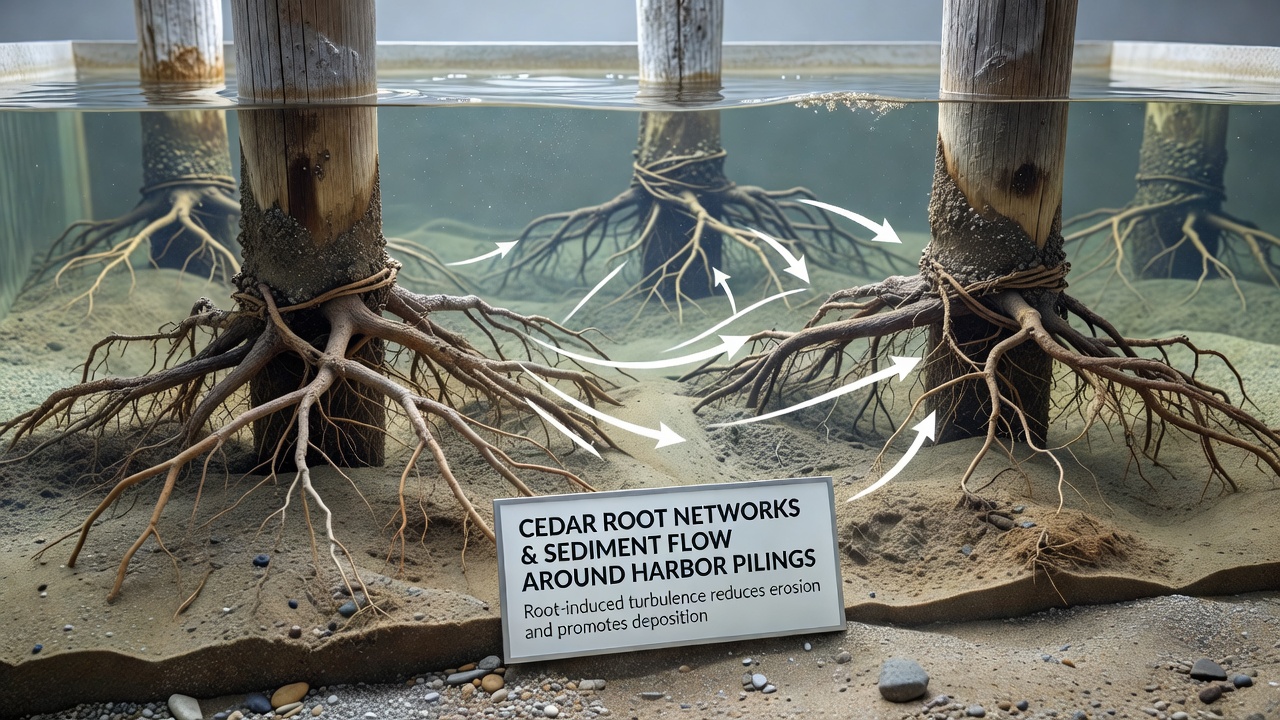
Cedar root networks extend through coastal soils near harbor facilities where western red cedar and similar species establish themselves along shorelines. These networks consist of dense lateral and vertical roots that interact directly with sediment particles in intertidal zones and subtidal areas around pilings. Data from monitoring stations show roots altering local flow patterns by increasing surface roughness and creating micro-eddies that affect particle settling rates.
Harbor pilings installed in cedar-dominated coastal regions experience modified sediment dynamics because the roots occupy space in the substrate and extend outward. Studies conducted along the Pacific Northwest coastline indicate that root density correlates with reduced sediment transport velocity within one to two meters of piling bases. This occurs as roots intercept suspended particles during tidal cycles and redirect water movement around obstructions.
Root Structure and Sediment Interaction Mechanisms
Western red cedar develops extensive shallow root mats supplemented by deeper taproots in well-drained coastal soils. These mats trap fine sediments during ebb tides while permitting coarser materials to pass through gaps between individual roots. Observations recorded at multiple harbor sites reveal that root networks increase local deposition by 15 to 30 percent compared to areas without cedar presence, according to measurements collected by the U.S. Army Corps of Engineers.
Root exudates and associated microbial communities further influence sediment cohesion. Bacteria and fungi attached to root surfaces produce polysaccharides that bind particles into aggregates less susceptible to resuspension. Researchers tracking these processes note higher organic content in sediment samples taken from within root zones versus control sites located 50 meters away.
Case Examples from Coastal Installations
One installation in British Columbia documented root encroachment around steel pilings over a five-year period beginning in 2021. Sediment accumulation around the pilings reached 12 centimeters above baseline levels by mid-2025, while adjacent pilings without nearby cedar roots showed net erosion of 4 centimeters. Similar patterns emerged in a comparative study along the Oregon coast where cedar stands bordered older wooden dock structures.
Monitoring equipment deployed in September 2026 at three additional sites continues to collect velocity and turbidity readings that confirm earlier findings. The data streams show consistent reduction in peak flow speeds near root-influenced pilings during storm events, with the effect most pronounced when root density exceeds 40 percent ground cover within five meters of the waterline.
Regional Variations and Measurement Approaches
Conditions differ between sheltered inlets and exposed harbor entrances. In protected waters cedar roots exert stronger control over sediment budgets because wave energy remains lower and tidal exchange slower. Exposed locations experience periodic scouring that limits root expansion and reduces the overall sediment retention effect. Australian coastal researchers have reported comparable interactions involving related conifer species in temperate ports, though root architecture varies with soil salinity.
Measurement techniques include acoustic Doppler current profilers positioned at multiple depths alongside sediment traps deployed at varying distances from pilings. These instruments capture both horizontal transport and vertical settling rates. Data processed through standard hydrodynamic models allow separation of root-induced changes from broader harbor circulation patterns.
Long-Term Implications for Harbor Maintenance
Ports that border cedar forests encounter gradual shifts in maintenance requirements around fixed structures. Increased deposition near pilings can necessitate more frequent dredging in some zones while decreasing it in others where roots stabilize slopes. Records from Environment Canada indicate that facilities incorporating vegetative buffers in planning phases experience measurable differences in sediment budgets over decadal timescales.
Root networks also affect corrosion rates on metal pilings by altering oxygen availability at the sediment-water interface. Lower oxygen levels in deposited sediments slow certain electrochemical processes, though this benefit depends on consistent sediment cover. Ongoing surveys track these variables to refine predictive models used by harbor engineers.
Conclusion
Cedar root networks modify sediment flow around harbor pilings through physical obstruction, particle trapping, and alteration of local hydrodynamics. Measurements from multiple regions demonstrate consistent patterns of increased deposition and reduced transport velocities near established roots. Continued data collection through 2026 and beyond provides additional detail on seasonal and storm-related variations that inform infrastructure management decisions.