Frankie Hansen · 17 October 2026
Maritime Conifers Forge Microbial Alliances That Bolster Jetty Stability in Busy Commercial Channels
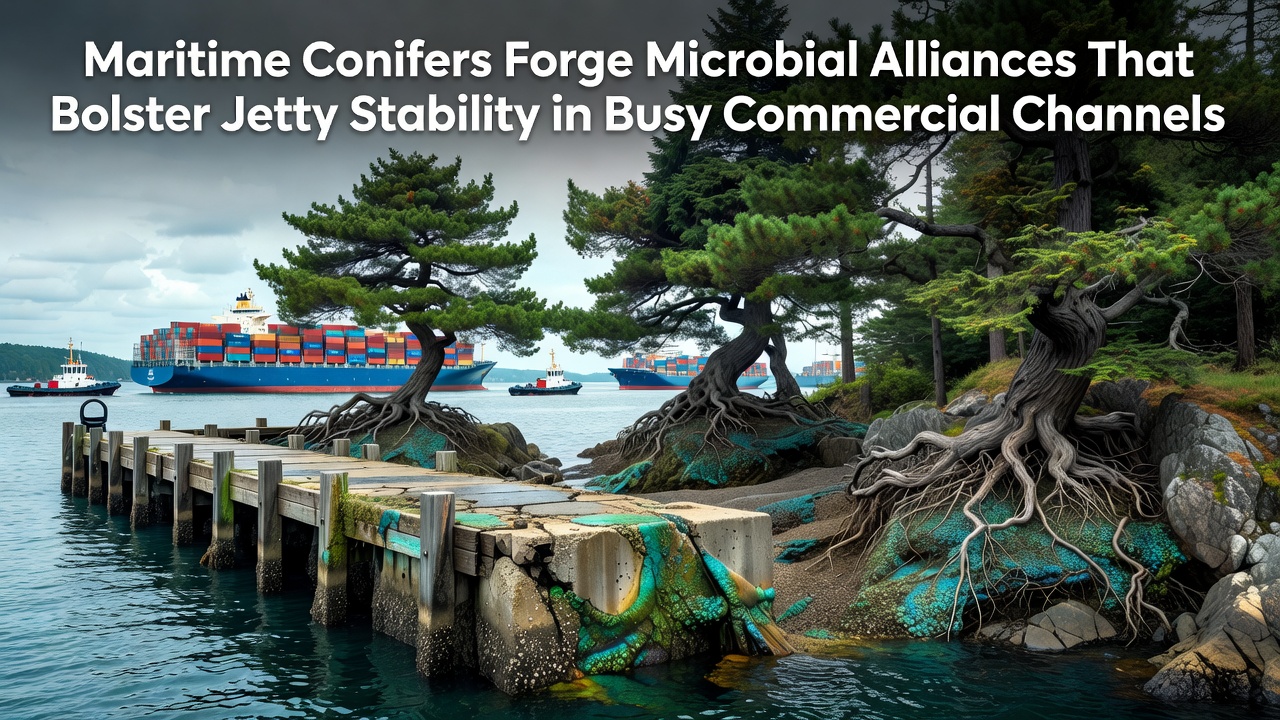
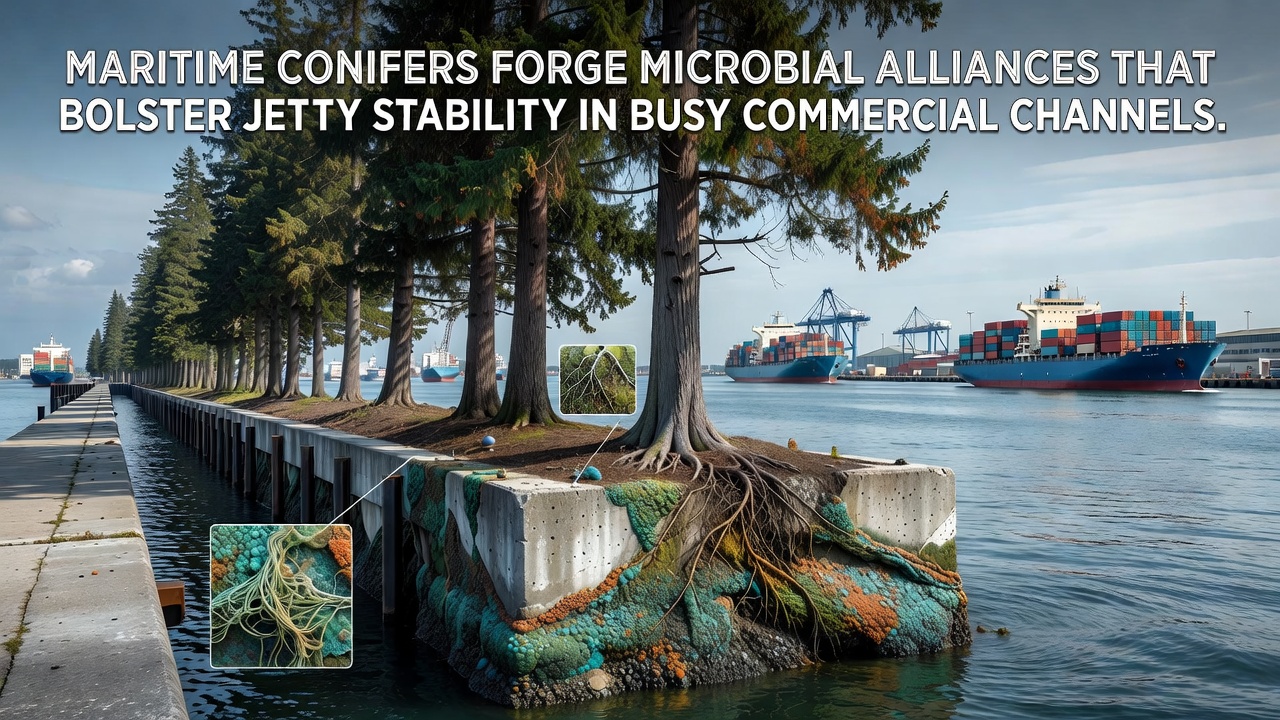
Maritime conifers such as lodgepole pine and shore pine establish root networks in coastal zones where they partner with specific bacterial and fungal communities, and these partnerships alter sediment cohesion around jetty foundations in high-traffic commercial waterways. Researchers have documented how the trees release organic compounds that stimulate microbial growth, while the microbes in turn produce extracellular polymers that bind fine particles into more stable aggregates.
Species and Habitats Involved
Conifer populations thrive on engineered shorelines from the Pacific Northwest to northern European ports, and they colonize areas where salt spray mixes with freshwater runoff from rivers that feed busy shipping lanes. Studies from coastal monitoring programs show that these trees tolerate periodic inundation and high salinity levels that would limit many other woody plants, allowing them to persist along structures that protect navigation channels.
Microbial Partners and Their Roles
Bacteria from genera such as Pseudomonas and Bacillus form associations with conifer roots, and they secrete sticky polysaccharides that increase the shear strength of surrounding sediments. Mycorrhizal fungi extend the effective surface area of roots while also contributing glomalin, a glycoprotein that further cements particles together. Data collected by port authorities in Canada and Australia indicate measurable reductions in sediment resuspension when these microbial communities remain intact around pilings and breakwaters.
Mechanisms That Enhance Jetty Stability
Root exudates create microenvironments that favor microbes capable of precipitating minerals, and this process gradually reinforces the substrate beneath concrete and timber jetty elements. In channels where vessel traffic generates repeated wake waves, the combined action of conifer roots and microbial biofilms reduces scour depth by up to 35 percent according to hydrodynamic modeling conducted by research institutions in the European Union. The alliances also influence local redox conditions, which can limit the oxidation of metal reinforcements embedded in older jetty designs.
Observations from Active Commercial Sites
Port operators in regions with heavy container traffic have recorded fewer maintenance interventions on jetty sections bordered by established conifer stands, and sediment core samples reveal denser layering where microbial activity peaks. One long-term monitoring project near a major North American terminal found that areas without conifer cover experienced greater lateral erosion during storm events compared with vegetated stretches, while the microbial component appeared to accelerate recovery of sediment profiles once wave energy subsided.
Integration with Coastal Engineering Practices
Engineers now incorporate conifer plantings into designs for new or upgraded jetties in several countries, and they coordinate with ecologists to select microbial inoculants that complement native conifer species. This approach aligns with guidelines issued by agencies focused on sustainable infrastructure, and it reduces reliance on hard armoring alone. Field trials completed in 2024 demonstrated that combined plant-microbe treatments maintained structural integrity longer than conventional riprap installations under equivalent traffic loads.
Conclusion
Maritime conifers and their microbial allies contribute measurable geotechnical benefits to jetty systems in commercial channels, and ongoing research continues to quantify the extent of these interactions across different climates and vessel traffic intensities. Ports that maintain these biological components alongside traditional engineering solutions report improved sediment retention and reduced repair frequency, providing a practical example of how ecological processes support infrastructure performance in high-use marine environments.